Bathroom Renovation Cost in Vancouver: Pricing Factors, Permits and Waterproofing
Bathrooms are the smallest rooms most people ever renovate, and often the most expensive per square foot. Nearly every trade works in that small footprint — demolition, plumbing, electrical, waterproofing, tiling, glazing, finishing — and the most important work is the part you will never see once the tile is on. This guide explains what actually drives bathroom renovation costs in Vancouver, why waterproofing deserves more attention than fixtures, and what to confirm before comparing quotations.
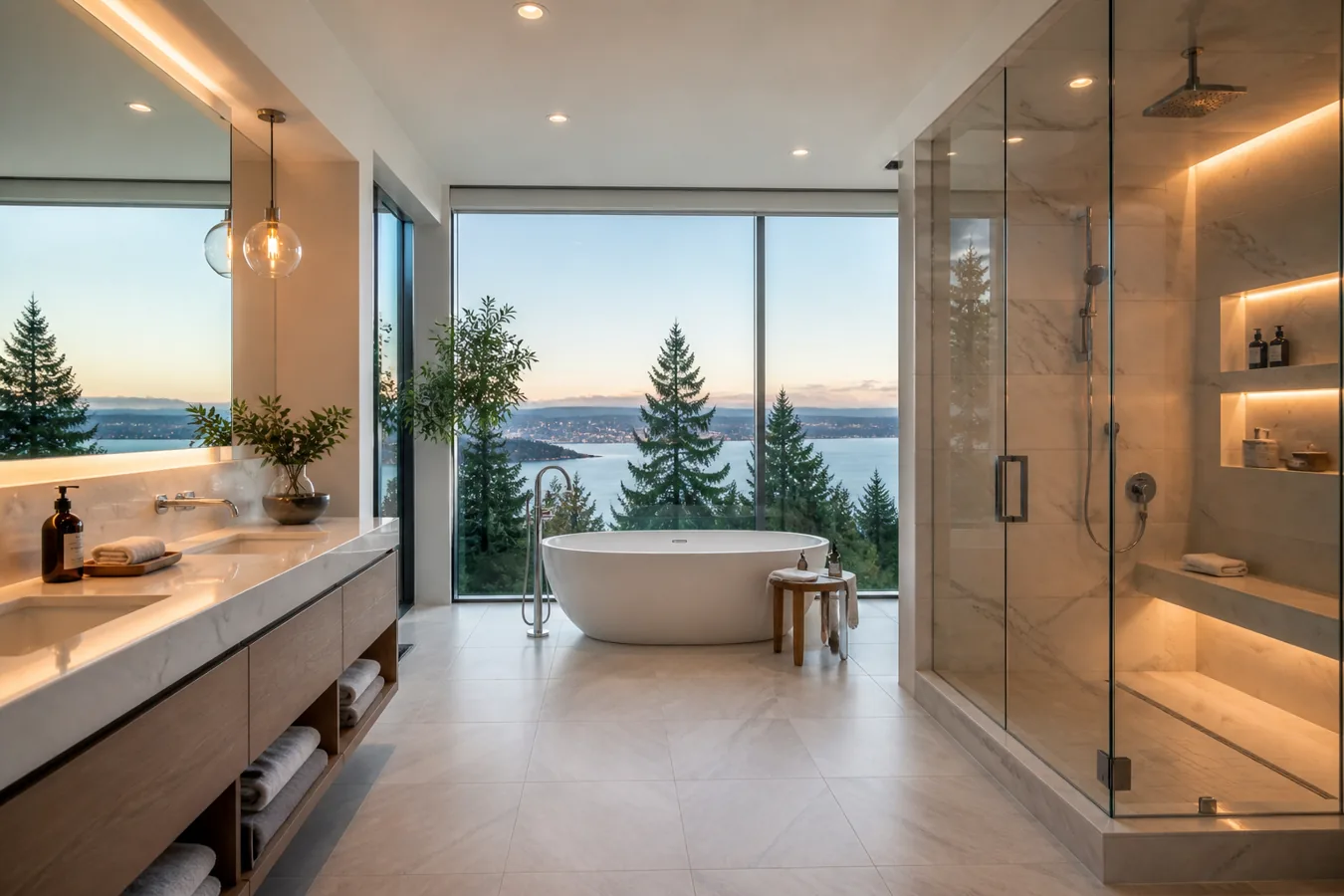
Why Even Small Bathrooms Can Involve Substantial Work
A five-square-metre bathroom concentrates more building systems than any other room of its size: supply and drain plumbing, ventilation, electrical circuits near water, waterproof assemblies, and finishes that must tolerate daily moisture for decades. That density is why two bathrooms that look similar in photos can be very different projects, and why bathroom work rewards planning more than almost any other renovation. It is also why the overall principles in our guide to home renovation costs in Vancouver apply here with extra force: cost follows conditions and scope, not room size.
Cosmetic Update Versus Complete Renovation
The first budget decision is scope. A cosmetic update keeps the layout and the wet areas intact; a complete renovation takes the room back to the framing and rebuilds it. The table compares what changes between the two.
| Factor | Cosmetic update | Complete renovation |
|---|---|---|
| Layout | Fixtures stay in place | Fixtures may relocate; layout can change |
| Walls and floor | Finishes over existing surfaces where sound | Opened to framing; substrates replaced |
| Plumbing and electrical | Like-for-like fixture swaps | Rough-in reworked; permits may apply |
| Waterproofing | Existing assembly retained | New waterproofing system installed |
| Hidden-condition risk | Lower, but existing problems stay hidden | Higher discovery, but problems get fixed |
| Typical duration | Shorter | Longer; approvals and lead times matter |
A cosmetic refresh is a legitimate choice for a sound, relatively recent bathroom. For an older bathroom — particularly one with any history of moisture — resurfacing over unknown conditions can simply postpone a larger repair.
What the Work Actually Involves
Demolition and disposal
Bathroom demolition is careful work in a confined space: protecting the route through the home, removing tile and substrates, capping services safely and disposing of heavy waste. In homes built before 1990, WorkSafeBC requires a hazardous-materials survey by a qualified person before renovation work that could disturb materials such as drywall compound or sheet flooring — a step that belongs in the plan, not the surprises column.
Plumbing layout and fixture relocation
Keeping fixtures where they are is the single most effective way to contain bathroom costs. Moving a toilet, shifting a shower drain or converting a bathtub to a walk-in shower changes drain routing, venting and supply lines — work that may involve opening floors or ceilings below and that may require permits depending on the municipality. Relocation is often worth it for a genuinely better layout; it should simply be a deliberate decision, priced in writing, rather than an assumption.
Electrical and ventilation requirements
Modern bathrooms typically involve protected circuits near water, adequate lighting, and often new circuits for heated floors or bidet seats. Ventilation matters as much in this climate as any finish: an undersized or poorly ducted fan feeds the humidity that shortens a bathroom's life. Electrical work in BC is regulated work performed under permit by licensed trades or, in limited detached-home cases, under a homeowner permit — administered by Technical Safety BC in most municipalities and by the City of Vancouver within that city.
Waterproofing: Where Bathroom Budgets Are Won or Lost
Waterproofing systems
Tile and grout are not waterproofing. Every durable shower relies on a continuous waterproof assembly behind the tile — and there are several legitimate ways to build one: sheet membranes, liquid-applied membranes and foam board systems among them. Each system can perform well when installed as a complete, compatible assembly following the manufacturer's instructions; most failures come from mixing components, skipping details or rushing cure times rather than from the choice of system itself. No system is "completely waterproof" in the abstract — performance depends on design, installation and maintenance.
Shower-base and bathtub considerations
Shower bases range from preformed acrylic units to fully tiled custom bases with sloped mortar beds or manufactured trays, with curbless designs requiring the most planning because the floor structure itself may need modification to achieve drainage. Bathtub decisions carry similar trade-offs between standard sizes and custom installations. In each case the visible product is the smaller part of the story; the substrate, slope and waterproofing beneath it determine how long it lasts.
Common waterproofing failures
Patterns we see repeatedly in failed bathrooms: membranes terminated short of the required height; niches and benches left unsealed at their most vulnerable corners; incompatible products layered together; drains not properly integrated with the membrane; and silicone asked to do a membrane's job at moving joints. None of these are visible on day one. All of them are visible within a few years.
Warning signs of poor bathroom construction
- Cracked or persistently discoloured grout lines at floor–wall junctions
- Tiles that sound hollow or move slightly underfoot
- Musty odour that returns despite cleaning and ventilation
- Staining on the ceiling below an upstairs bathroom
- Soft baseboards or flooring near the tub or shower
Any of these in an existing bathroom is a reason to investigate before resurfacing over the problem.
Finishes and Fixtures
Tile type, size and installation complexity
Tile pricing is only half material; the other half is labour, and labour follows complexity. Large-format tile demands flatter substrates and careful handling; mosaics multiply cutting and grouting time; natural stone needs sealing and gentler methods; patterned layouts add layout time and waste. Material costs vary by manufacturer, brand, product line, finish, quality, availability and supplier pricing, so identical-looking tiles can be priced far apart — which is one reason quotations carry allowances rather than final figures until selections are made.
Glass shower enclosures
Frameless glass is measured after tiling and manufactured to the actual opening, which places it near the end of the schedule and on its own lead time. Framed and semi-frameless systems are more forgiving and generally quicker to supply. Glass is a common late-schedule item to plan around rather than a last-minute purchase.
Vanity and countertop options
Vanities span stocked flat-pack units through semi-custom lines to fully custom millwork, with countertop choices layering on top. As with cabinetry generally — covered in more depth in our kitchen renovation guide — the practical differences are lead time, sizing flexibility and durability, not appearance alone.
Approvals and Logistics
Permit considerations
Like-for-like cosmetic replacement often proceeds without a building permit, while work that alters plumbing, electrical or structure may require permits and inspections — in the City of Vancouver, moving plumbing or wiring is a stated permit trigger, and each Metro Vancouver municipality applies its own rules. Permit requirements depend on the exact scope of work, property, municipality and current regulations; confirm directly with the applicable authority before work begins. Our renovation permit guide covers the process in detail.
Strata considerations for condo bathrooms
In a condo, bathroom plumbing usually connects to shared building systems, which is exactly the kind of work strata corporations regulate closely. Written strata approval typically comes before any municipal permit, and each strata may have different bylaws, insurance requirements, deposits and working hours. Plumbing shut-offs affecting other units also need building coordination. The full sequence is covered in our condo renovation guide.
Factors affecting project schedules
Bathroom timelines are shaped less by tiling speed than by dependencies: strata and municipal approvals, inspection scheduling, waterproofing cure times that should not be rushed, tile and vanity lead times, and glass measured only after tile is complete. Concealed conditions and mid-project changes extend any schedule. An educational article cannot promise durations; a well-planned project sequences the long-lead items first.
Hiring and Preparing
Questions to ask a bathroom contractor
- What waterproofing system will be used, and will it be installed as a complete, compatible assembly?
- How is waterproofing verified before tile goes on?
- Who obtains permits if the scope requires them, and are inspections included?
- How will concealed damage be documented and priced if demolition reveals it?
- What allowances are carried for tile, fixtures, vanity and glass — and are they realistic for my selections?
- What is excluded from the quotation?
- How will the rest of my home be protected during the work?
- Is the company insured, with documentation available?
Homeowner preparation checklist
- Decide early whether fixtures stay in place or relocate — it is the biggest single cost lever.
- Note any history of leaks, staining or musty odours and share it honestly.
- For pre-1990 homes, plan for the required hazardous-materials survey.
- For condos: obtain strata bylaws and alteration forms before design decisions.
- Choose tile, fixtures and vanity before work starts, not during it.
- Confirm which bathroom the household will use during the work.
- Ask how long the new shower must cure before first use — and respect it.
Frequently Asked Questions
Why do bathroom renovations cost so much for such a small room?
Because nearly every building trade works in that small footprint — plumbing, electrical, waterproofing, tiling, glazing and finishing — and the room must resist daily moisture for decades. The concentration of systems, not the floor area, drives the cost.
Do I need a permit to renovate a bathroom in Vancouver?
It depends on scope and municipality. Like-for-like cosmetic replacement often does not require a building permit, while altering plumbing, electrical or structure may. Confirm requirements with your municipality before work begins, and with your strata first if you live in a condo.
What is the most expensive mistake in bathroom renovations?
Inadequate waterproofing. A failed membrane or shower pan can quietly damage framing and the spaces below, and correcting it means removing finished work. Money spent on a properly installed waterproofing assembly protects everything built on top of it.
Can I convert my bathtub to a walk-in shower?
Often, yes — it is one of the most requested bathroom changes. It typically involves new drain configuration, framing adjustments and a full waterproofing assembly, and depending on the municipality it may require permits. Whether it suits your home also depends on household needs and resale considerations worth discussing before committing.
Which waterproofing brand is best?
No single system is universally superior. Sheet membranes, liquid-applied membranes and foam board systems can all perform well when installed as complete, compatible assemblies according to the manufacturer's instructions. Installation quality and detailing matter more than the logo on the packaging.
What happens if the contractor finds rot or mould behind my walls?
The cause is identified, compromised material is removed and replaced, and the assembly is rebuilt correctly — documented and priced as a change to the original scope. Ask any contractor, before signing, how that process will be handled in writing.
How is a condo bathroom renovation different from a house?
Written strata approval usually comes before anything else, the plumbing connects to shared building systems, water shut-offs need coordination, and elevator bookings, insurance requirements and working-hour rules apply. The work itself is similar; the approvals and logistics around it are not.
What should I decide before getting quotations?
Whether fixtures stay or move, your approximate finish level, and your must-haves versus nice-to-haves. Quotations based on the same written scope and comparable allowances are the only ones you can compare fairly.
Talk Through Your Bathroom Project
Planning a renovation in Metro Vancouver? Luxevita Construction Ltd. can review your project goals, property conditions and intended scope before discussing project-specific options. Contact the team to arrange an initial conversation.
Arrange a conversation or see our bathroom and ensuite renovation service.
Planning a renovation in Metro Vancouver?
Tell Luxevita Construction Ltd. about your property, priorities and intended scope. We can review the project and prepare a clear written quotation after a site assessment.
Request a Project Review